How to become a World Champion
During the candidates tournament in London I had dinner with my good friend Alan Minnican and not surprisingly, the conversation circled to chess improvement at some point. Alan was considering lessons, but is very busy with work. I assured him that hiring a good trainer would be worth it, but that the first thing he should do was to spend 20-30 minutes a day solving exercises.
Now, usually when you give someone advice, nothing happens. People generally do not change their habits or their way of approaching things and for this reason rarely have changed results. But of course there are exceptions. Alan turns out to be one of these:
“You can thank Jacob for his chat at the candidates and his recommendation for daily calculation/combination work. I only have two books here: Calculation and his older one Excelling at Combinational Play.” Alan Minnican, 2013 U-2200 ACO World Champion.
Besides just stating that the first advice given in this series of postings has already paid off with tournament success, I want to talk about an issue I have been thinking about recently.
You get what you pay for
Although this old adage certainly is not true regarding everything, it does seem to be true when it comes to chess training. I see a lot of kids and amateurs using free exercises from Chess.com or Chesstempo.com in their training. The attraction of having a rating for your solving and to have a system that chooses the right exercises for you is of course high. Unfortunately the quality of the exercises is generally low. So, in order to satisfy a very primal need for instant gratification (the rating part) and follow the basic business model we use (money in good, money out bad) people end up spending a lot of time dealing with very low-quality training material. And a chess book is really not that expensive!
But I would like to add that you really want to use a somewhat recent book, which has been checked with computers. Not because people played worse in the past, but because sometimes something flashy was stupid and the exercise in itself was pointless.
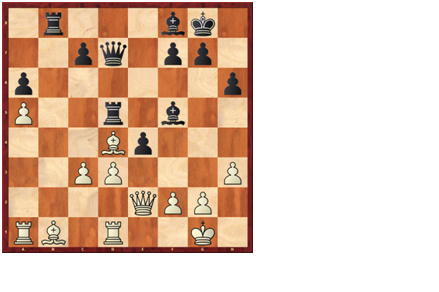
A good example of a book I should have stayed away from is ****** ***** ***** by ********* ******. There I found the following exercise:
Recent Comments