Should Chess Authors play the openings they recommend?

July 15th, 2013 91 comments


Some people assert that the authors of chess repertoire books should not be allowed to play anything other than what they have recommended in their books. I have always found that this claim, if upgraded to law, would seriously injure the human rights of a small group of people I have a natural positive bias towards.

Why do chess authors play in tournaments? Basically to win games, rating and prizes – just like everyone else. They are not on a book tour!

Repertoire books are great and extremely useful. At times someone will say here on the blog that grandmasters don’t read the Grandmaster Repertoire books. Well, we know for sure that the Chinese don’t really read them, because they keep getting stuffed by recommendations from them! But we also know that Anand, Kramnik, Ponomariov, Aronian, Gelfand, Ivanchuk, Svidler, Grischuk, Adams, Polgar and most likely all the other top players in the world have them – with the exception of Shirov, who “doesn’t read chess books”.

However, none of these players would ever follow a repertoire strictly. Instead they look for ideas and information; new analysis and so on. They have their own core repertoires, but will at times include ideas from wherever they find them. In some cases they will take up a new opening and check the analysis carefully; adding their own ideas.

It is not a surprise to me that after the Avrukh and Delchev books were published on the Grünfeld this opening became wildly popular among top players.

There are times when players of a reasonable level will follow a repertoire book for a tournament. Recently GM Sune Berg Hansen followed Bologan’s book on the Chebanenko Slav at the Danish Championship and in general did OK out of the opening with it. I am sure it happens all the time.

But what about the authors?

I want to give two examples of authors following their repertoires from the same tournament:

Read more…

Categories: Jacob Aagaard's training tips Tags:

Artur Yusupov’s 9-volume series goes from strength to strength

July 15th, 2013 30 comments

We are very proud to announce that the Danish Federation, on the suggestion of the three national trainers (of which I am one and obviously biased and most pushy) have officially recommended Artur Yusupov’s nine-volume training series to their members. This is not just a “favour to Jacob” – as it took some time to get them to do it. They have made special offers in their web shop, published a long review in the membership magazine and so on.

In September Artur will visit Copenhagen and Middelfart for training sessions with the elite and Danish “ambitious amateurs”.

Again and again on this blog I recommend the Yusupov books to those asking “what should I do to improve”. There are many ways to improve and this is only one. But it is tried and tested, well-structured and easy to use. Have a look here and download a chapter from each of the books for free…

Oh yes, after some struggle, I managed to talk Artur into a guest appearance on the blog for a Q & A session at the end of August.

Categories: Publishing Schedule Tags:

Don’t be Naive

July 8th, 2013 58 comments


One of my least proud moments as a chess player on the international circuit was in 1998 when I lost a game with absolutely no involvement from either player:

Sergei Tiviakov – Jacob Aagaard
Breda 1998

1.e4 c5 2.Nf3 Nc6 3.d4 cxd4 4.Nxd4 Nf6 5.Nc3 e5 6.Ndb5 d6 7.Bg5 a6 8.Na3 b5 9.Nd5 Be7 10.Bxf6 Bxf6 11.c3 0–0 12.Nc2 Bg5 13.a4 bxa4 14.Rxa4 a5 15.Bb5
I knew Sergei was playing this off-beat move, but I had recently written a book on the Sveshnikov and not found anything wrong with the official defence.

15…Ne7 16.Ncb4 Be6 17.Nxe7+ Qxe7 18.Bc6 Rac8 19.Rxa5 Rxc6 20.Nxc6 Qb7
[fen size=”small”]5rk1/1q3ppp/2Npb3/R3p1b1/4P3/2P5/1P3PPP/3QK2R w K – 0 21[/fen]
My book said that this was the way to play with Black and that it should all end in perpetual check. I did have a little voice in the back of my head that asked why Sergei was entering this variation if this was the case. But in a moment of complete stupidity, I ignored it, thus wasting a chance to play a real game against a truly great player. Then the “novelty” came.

21.h4! Qxc6 22.hxg5 Qxe4+ 23.Kf1 f6 24.Ra4 Qb7 25.Qd3 Bf5 26.Qxf5 Qb5+ 27.Kg1 Qxa4 28.Qxh7+ Kf7 29.gxf6 Kxf6 30.Rh3 Ke6 31.Qxg7 Qd1+ 32.Kh2 Rxf2 33.Rh6+ Kd5 34.Qb7+
1–0

Luckily I got to play Sergei for real nine years later. Although I fell into a bad opening line again, this time I was only badly worse and managed to fight my way out of it. I was even winning somewhere towards the end, but at that point I relaxed, happy not to lose the game.

Read more…

Categories: Jacob Aagaard's training tips Tags:

Is chess really a young man’s game?

June 24th, 2013 76 comments

Diagram Spain
Black to play

Kasparov no longer plays and, having passed 50, if he did play he would just be a has-been, at least if you listen to the words coming out of his own mouth. “Chess is becoming younger” is one of the claims he has made, in-between his disrespect for the Anand – Gelfand World Championship match last year and his suggestions that Anand should retire.

It all sounds very plausible when someone like the greatest player in history says this with the authority and conviction he usually produces. But ask yourself: would Kasparov be a top 10 fixture if he was still playing? Do you think he would be that much worse than Aronian, as an example, if he was still as determined to play chess as he used to be?

Insiders all know that Kasparov is “in love” with Magnus Carlsen and has wanted to see him as the World Champion for a long time. He started the talk of an Aronian – Carlsen match as the only legitimate thing; but personally I prefer the current situation where we have a shaky qualification system, when I think of the alternative of the late 1990s, where the World Champion offered a match for two players, and then gave the loser a World Championship match. Actually, the match that Kramnik won was first turned down by Anand, as far as I know.

Read more…

Categories: Jacob Aagaard's training tips Tags:

We have a confirmed date (98%)

June 20th, 2013 132 comments

We are a little disappointed by our printer. How dare they put anyone else in front of us in the queue? Well, easily it appears. But with Kotronias on the King’s Indian – Fianchetto Systems uploaded and the King’s Gambit being uploaded today, everything is well and we dare project a publication date for seven books. This includes Playing the Trompowsky – An Attacking Repertoire, as well as the Mongoose title Best Play by Alexander Shashin and the paperback versions of Calculation, Positional Play and Strategic Play.

Things can still go wrong, get delayed and so on. But at least there is something to look forward to.

Vassilios Kotronias KID – Fianchetto Systems 12 July
Richard Pert Playing the Trompowsky 12 July
John Shaw The King’s Gambit 12 July
Ntirlis/Aagaard Playing the French Summer
Emanuel Berg GM 14 – The French (Winawer) Summer
Axel Smith Pump Up Your Rating Summer
Jacob Aagaard Attack and Defence Summer
John Shaw Playing 1.e4 – Caro-Kann, 1…e5 Autumn
Ftacnik (Aagaard) GM6a – Beating the Anti-Sicilians Autumn
Danny Gormally Mating the Castled King Autumn
Jacob Aagaard Endgame Play Autumn
Tibor Karolyi Mikhail Tal’s best games 1 Autumn
Judit Polgar From GM to Top Ten Autumn
John Shaw Playing 1.e4 – ASicilian & French Winter
Jacob Aagaard Thinking Inside the Box Winter
Ftacnik (Aagaard) GM6b – The Najdorf Winter
Categories: Publishing Schedule Tags:

The necessity of companionship

June 17th, 2013 26 comments

 
Michael Neill, the Hollywood success coach, once said that he had met no one in his time in Hollywood who had achieved success on their own. Everyone had someone who supported them, someone who was a part of their team in one way or another. This could either be as a manager, coach, parent, sibling, spouse and so on. It was always: “my people will call your people” and so on. The construction was always different.
 
I heard this on his internet radio show in early 2007 and I immediately could see reasons why this was so, on top of the obvious sharing of tasks: we are social animals and we simply do much better if we are not alone in our quest.
 
In chess you have very few exceptions to this rule (Fischer, Larsen). I would like to point to the two most obvious examples of symbiotic relationships:
 
Kasparov had Dokhoian to carry his suitcases, book his tickets and help him with the chess.
Topalov has Danailov to organise everything and tell him what to do.
 
In the first case the player was the boss, in the second case the manager is the boss. I attach no value judgment to either set-up; they both suited the player ideally. Kasparov has a great need to dominate his surroundings; Topalov, on the other hand, would rather play tennis than be involved in business discussions.
 
The consequences of this idea were dramatic for me in 2007. I played in the Spanish team Championship and got a few ideas at home from John, who had taken on the job as my second. The same happened during the British Championship. In both events I scored 2700 performances and at times played brilliantly.
 
I won the remaining points I needed to go over 2500 and became a grandmaster – as well as won the British Championship.
 
What this means for you!
 
Not everyone is able to hire a second for a tournament, but there are a lot of things you can do to add people to your chess team. The following is probably the only training tip I have that can compete with the 20 minute/6 times a week tip: create a training team!
 
The idea is simple: collect 1-3 friends of similar strength and meet up regularly to do training together.
 
The main training should be solving, but you can also discuss opening ideas and play training games. But this would require that everyone studies consistently, which is often not the case.
 
The combination of social interaction with friendly competition is very powerful. It has the power to produce champions…

Categories: Jacob Aagaard's training tips Tags:

Understand what type of player you are and adjust your style accordingly

June 10th, 2013 104 comments


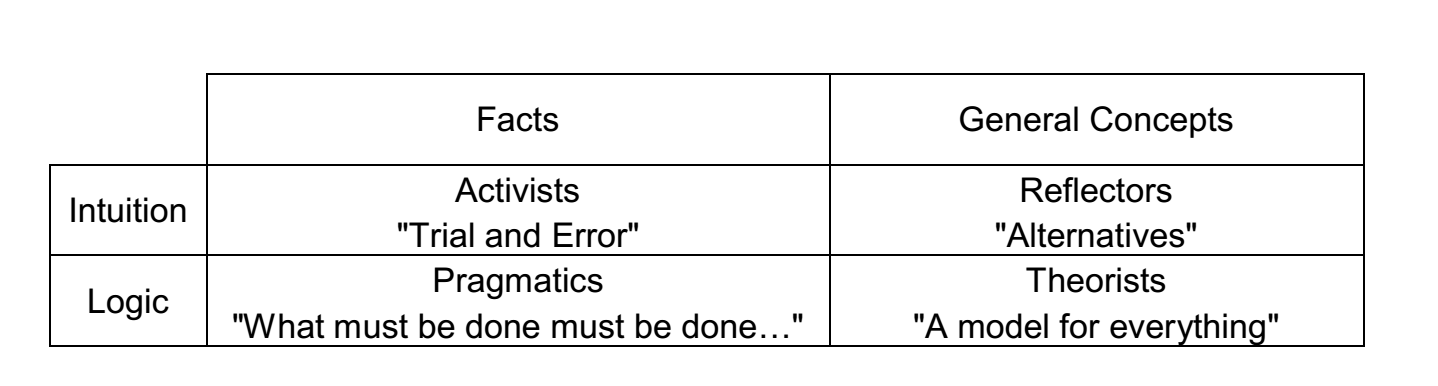
My Danish teammate Grandmaster Sune Berg Hansen mentions Foundation of Chess Strategy by another Danish Grandmaster, Lars Bo Hansen, as the chess book that has had the greatest influence on his own chess. It is not so much the explanations or the chess in the book, but the concept of dividing players into four categories that made an impression on Sune.

Lars Bo Hansen puts a name to four types of players and debates how they should play and how to play against them. They are: Activists, Reflectors, Pragmatics and Theorists.

They are divided into a grid that looks like this:
Grid

Lars Bo Hansen describes the inherent characteristics of each player, their strengths and weaknesses and so forth. While I find the chess a bit uninspired in the book, I do find the concept extremely useful and would recommend anyone to read this book and identify themselves in the grid.

The point to this is that the idea of the all-round player is close to being an illusion. Of all the World Champions the only one continuously mentioned as an all-rounder is Boris Spassky and I have a feeling that this is as much tradition as it is fact. And anyway, the ‘narrow-minded’ players who beat him up in matches, Petrosian, Karpov and Fischer all stand above him in chess history as far as I am concerned.

So, what we should do is design our opening repertoire according to our style and slowly improve in the areas where we are weak (avoiding them at all costs usually means a lot of rating points). But there are parts of chess that are better suited to our way of thinking, to our character and so on.

A final note on Hansen’s book: The references to business are poor as far as I am concerned and could with benefit be ignored entirely. Luckily they quickly disappear from the book. The idea of this particular grid does not originate in the world of business anyway; as with so many other things, it was thought up in Russia. I first saw it in Mark Dvoretsky’s writings as a brief note so it is possible the idea was his to start with.

Categories: Jacob Aagaard's training tips Tags:

Quality Chess joins forces with Forward Chess

June 7th, 2013 44 comments

We have been negotiating for a while with the owners of Forward Chess relating to our books being published on their app. We are happy to announce that we have come to agreement and that we have signed an agreement.

This is of course the easy part; next follows the conversion of our books to their format. It will be a lot of work and it will take time before all our books will be available in this format; if ever (some books are no longer relevant). But it is certainly the intention that most of our future books will be published in this format.


Categories: Publishing Schedule Tags: