GM 16 French – Killing the King’s Indian Attack

March 25th, 2015 20 comments

Here’s another preview of Grandmaster Repertoire 16 by Emanuel Berg, which is published today. It consists of a few lines I pulled from different parts of the relevant chapter, so this should not be considered an excerpt from the book, which is a lot more detailed.

I decided to show you a glimpse of Emanuel’s recommendation against the King’s Indian Attack, which is always popular at club level. I have focused on a couple of lines involving the author’s own games. Throughout the book and indeed most of the series, he has recommended lines that he himself plays, and this chapter is no exception.

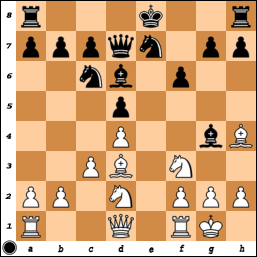
1.e4 e6 2.d3 d5 3.Nd2 c5 4.Ngf3

4.g3 is an alternative move order, with which White may try to avoid Black’s recommended system. The point is that, after 4…Nc6 5.Bg2, Black is unable to develop the bishop on d6 due to the hanging d5-pawn.

Therefore Emanuel prefers 4…Bd6, when 5.Bg2 Ne7 6.Ngf3 Nbc6 reaches the desired set-up. 5.Qg4!? is an interesting way to deviate, but Emanuel looked at it carefully and found an improvement for Black, which will be revealed in the book.

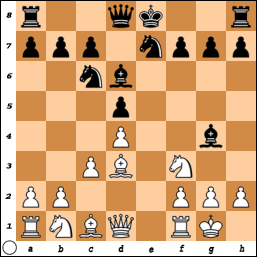
4…Nc6 5.g3 Bd6 6.Bg2 Nge7 7.0–0 0–0 8.Re1 Qc7

This set-up a great practical choice against the KIA. Black prevents the standard plan of e4-e5, and seeks to gain space. If White is not careful, he may easily find himself in a passive position resembling a reversed King’s Indian Defence gone wrong.
Read more…

Categories: GM Repertoire Tags:

Mating the Castled King – A review

March 23rd, 2015 3 comments

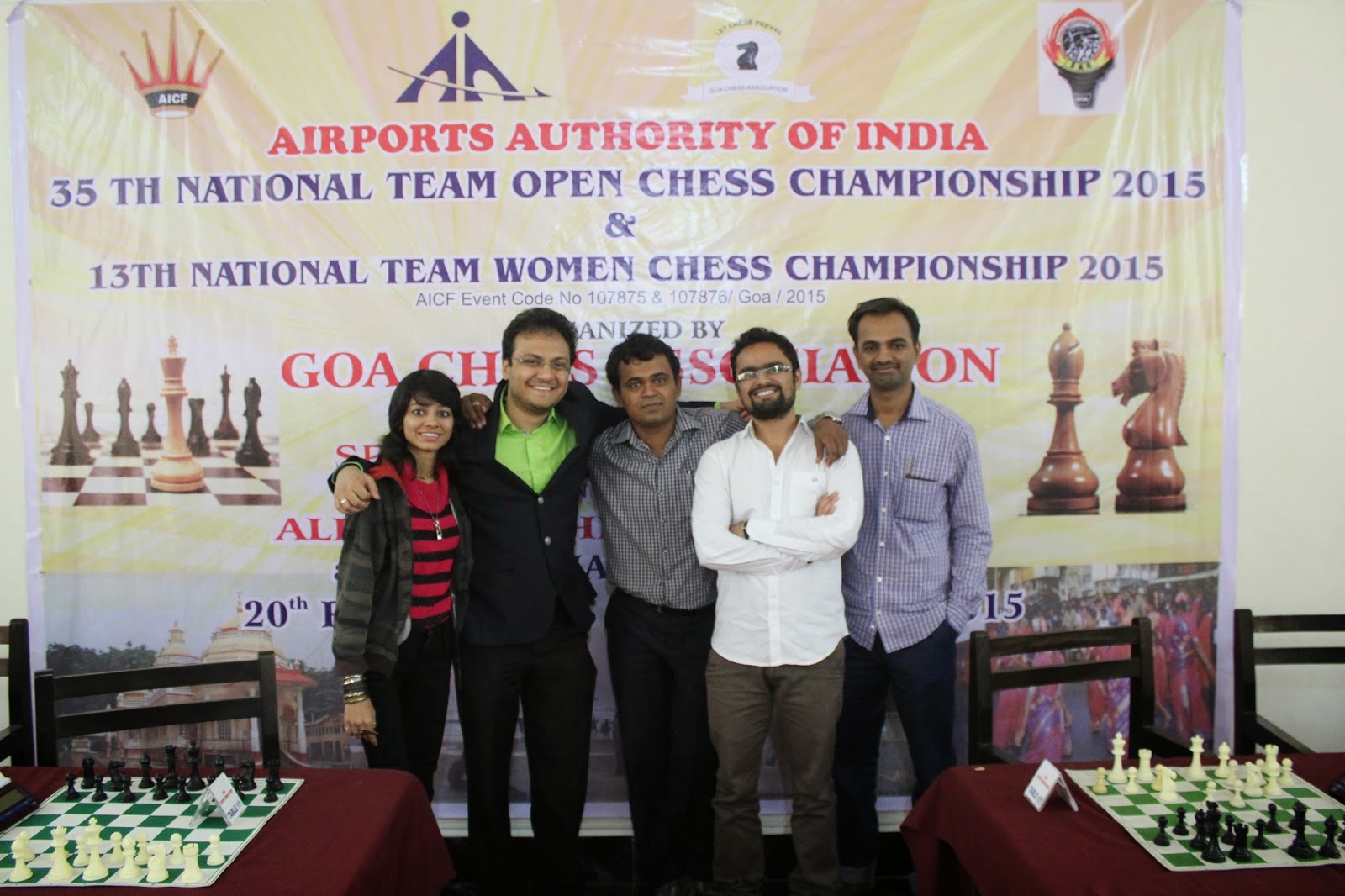
On his entertaining blog, IM Sagar Shah gives an in-depth review of Mating the Castled King by Danny Gormally, and discusses how he used the book to help prepare for the recent Indian National Team championships in Goa.

IMG_0571

“So is going through this book going to help you to become a better player? Of course! My personal experience is that your mind will start seeing patterns much faster.

When I went to Goa, I setup my chess board on a table in my room. I kept the book of Mating the castled King next to it. Whenever I had some time, I would open a random page and setup a position from the book and solve it. After solving the position, I would just make a note with a tick mark that I had solved the position. Add a star or two next to the problem if I really liked it. In this way, I was solving almost 5-10 positions everyday. This helped me to stay in excellent tactical shape and I was able to remain unbeaten in the tournament. I continued working with the book even after the tournament and I am happy to say that I have completed the 160 positions.

Final words: A unique book which not only helps you to get acquainted with mating patterns against a castled king but also helps you to improve your art of calculation thanks to the excellent quality of analysis.”

The full review is available here.

Categories: Reviews Tags:

Executing the Exchange French

March 17th, 2015 31 comments

Playing for a win against the Exchange Variation is a challenge that every French player will face at some point. In Grandmaster Repertoire 16 – The French Defence Volume Three, where appropriate Emanuel Berg advocates long castling for Black, followed by a kingside attack . His coverage of this plan improves significantly over the work of other authors, especially when it comes to identifying certain positions and moves orders where Black should NOT castle on the queenside.

Here is a shortened version of Emanuel’s analysis of a line where Black’s aggressive strategy works perfectly.

1.e4 e6 2.d4 d5 3.exd5 exd5 4.Nf3 Bd6 5.Bd3

Obviously White has several options on moves 4 and 5, all of which are discussed in the book.

5…Nc6 6.0–0 Nge7 7.c3 Bg4

Although Black’s last move hints at long castling, Emanuel makes it clear that Black should wait to see what White does over the next few moves before committing his king. If he opts for queenside castling at the wrong time, he could find himself clearly worse. Another important point is that …0–0 should not be played too quickly due to the Bxh7† trick.

8.Bg5

This is quite a popular move, which has the idea of going to g3 to exchange Black’s ‘good’ bishop.

8…f6 9.Bh4 Qd7 10.Nbd2

10.Bg3 Bxg3 more or less forces 11.fxg3, with a probable transposition to the next note. Instead 11.hxg3? h5! is a typical scenario where Black gets a strong attack.

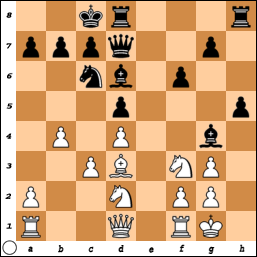
10…0–0–0 11.b4

Emanuel also shows that 11.Bg3 Bxg3 12.fxg3 (12.hxg3? h5! is, once again, far too dangerous) 12…Nf5 is promising for Black, and offers an improvement over one of his own games a few moves down the line.

11…Nf5 12.Bg3 Nxg3 13.hxg3

13.fxg3 Rde8 14.Qc2 Kb8 15.a4 occurred in Elbasuny – Amin, Amman 2006, and now Emanuel gives the improvement 15…Ne7!N, intending …Nf5 and/or …h5, with good attacking chances.

13…h5!

Watson recommends 13…Ne7 intending …h5, but Emanuel points out that pushing the h-pawn should be the top priority, as Black may be able to do without the knight move.

14.Qb3 h4!N

Proving the above point.

15.gxh4

15.Nxh4 is met by 15…Ne7 intending …g5, when the opening of the h-file will prove disastrous for White.

15…g5!

Black succeeds in opening up the kingside, giving him a clear headstart in the attacking race.

Categories: GM Repertoire Tags:

Self-help blog

March 13th, 2015 16 comments

John has been referring to some of my recent blogs as “self-help” posts. He always has this nice biting irony that you only find warm if you have known him for 20 years… Well, when I say warm, I actually don’t really mean it, but never mind. Anyway, it is nice sometimes to talk about human traits, as they are so influential on our decisions at the board.

In a conversation with friends over dental practices, beauty salons and other businesses they are involved in, I incidentally thought about our imperfections. We all have them. I, for example, hoard things. I have about 1000 unread books in my flat. I do read a lot, but I cannot keep up with the number of books I buy. I used to feel that I should be able to control myself better – or that this was a serious character flaw. But I have known for about 20 years that I will never spend more money than I have – partly because of the laws of physics – and I accept now that some of this is outright squandered on books I will never read.

So what? Publishing is a business under threat and my support for it is a good thing. Even if it is given for reasons that can best be explained by evolutionary psychology.

Actually I believe that this approach is the right way. Some “flaws” are not as much flaws as a part of an imperfect construction, called “a human”. We should learn to accept that they are what we are. We are our strengths and we are our weaknesses. Some things do not need explaining or understanding, all we need to do is to accept that they are the way they are. There is nothing more to it.

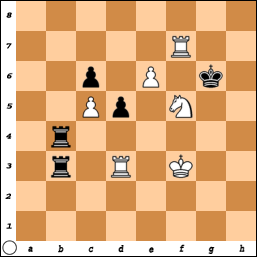
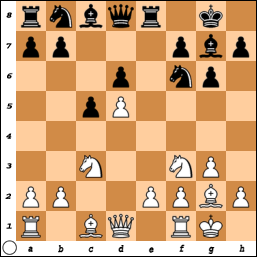
To assist with this Sam Shankland kindly provided a blitz game he played recently in a tournament in the San Francisco area.  Sam was White.

White to play

Here he wanted to play 1.Ne7+, which is mate in 19 according to Komodo 8. Instead he played 1.Ne3, which loses more or less on the spot.

These things are not explainable in chess terms. I am not sure any explanation given will ever satisfy us, whether right or wrong. All I know is that it would be useless. The game is lost and there is nothing to learn from this I fear.

After this game Sam and his opponent were in a shared lead. But as it was double round, Sam got another chance. He won with Black and took first prize. Because this is also a part of what Sam is – a champion who plays on, even after having entered the twilight zone…

Accept yourself for the good and the bad is today’s message. And change as much of the bad as seems possible – and the way to do this is to crowd it out with good stuff.

Categories: Jacob Aagaard's training tips Tags:

Negi novelty tested

March 11th, 2015 22 comments

The Poisoned Pawn variation of the Najdorf is one of the most theoretically dense variations in modern chess. Negi gave plenty of ideas against it in 1.e4 vs The Sicilian I. But would players remember the theory? And would the ideas work?

Yes and yes. Obviously.

Jorden van Foreest (2494) – Nico Zwirs (2358)
Amsterdam 20.02.2015

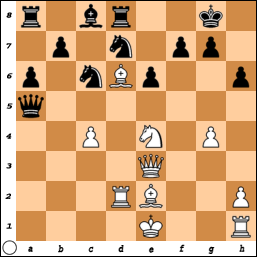
1.e4 c5 2.Nf3 d6 3.d4 cxd4 4.Nxd4 Nf6 5.Nc3 a6 6.Bg5 e6 7.f4 Qb6 8.Qd2 Qxb2 9.Rb1 Qa3 10.e5 dxe5 11.fxe5 Nfd7 12.Ne4 h6 13.Bh4 Qxa2 14.Rd1 Qd5 15.Qe3 Qxe5 16.Be2 Bc5 17.Bg3 Qd5 18.c4 Bxd4 19.Rxd4 Qa5+ 20.Rd2 0–0 21.Bd6 Rd8 22.g4 Nc6

All Negi. It’s on page 255 of the book if you wish to check.

23.g5!?

This move was a novelty when Negi suggested it, and 15-year-old Dutch IM Jorden van Foreest is the first to test it. In Negi’s words, this move is “the maximalist try”.

Negi’s main line is 23.0–0!? which is “the simplest way, which does not require too much analysis.”

Read more…

Categories: Fun Games, GM Repertoire Tags:

A sort of Scottish Blitz Championship

March 9th, 2015 8 comments

In Scotland we have an official blitz championship, held in June usually (and hopefully again this year!). It is an open Championship held in Edinburgh and is usually very well organised. Importantly, it is open to players from all nations. Last year it was won by Matthew Sadler in front of Arkadij Naiditsch. English GM Matthew Turner became Scottish Champion, as he is a member of FIDE through the Scottish Federation, although he would not be allowed to play for Scotland according to the selection rules. I would, but am a member of FIDE through the Danish Federation and thus had to console myself with third place.

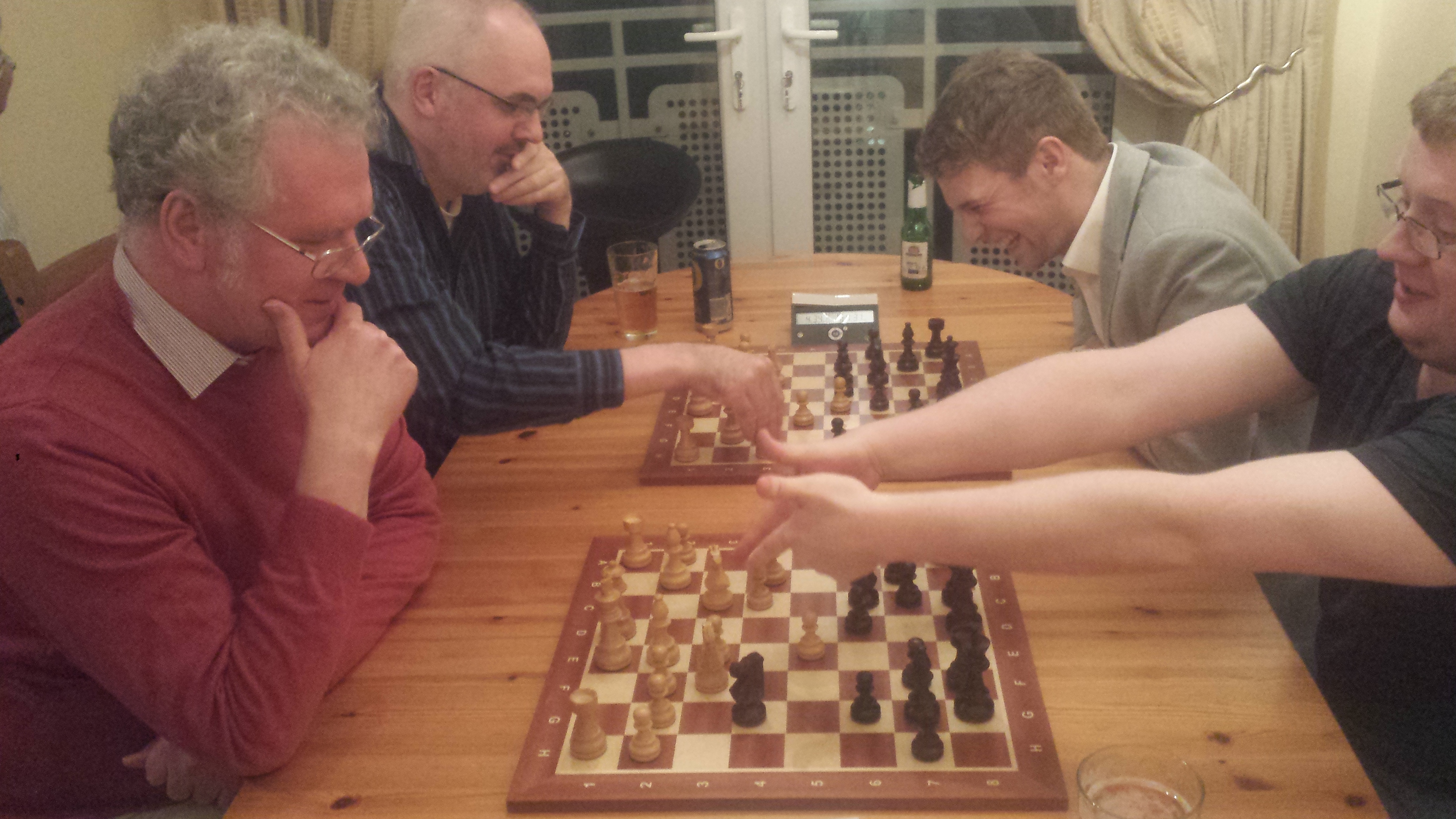
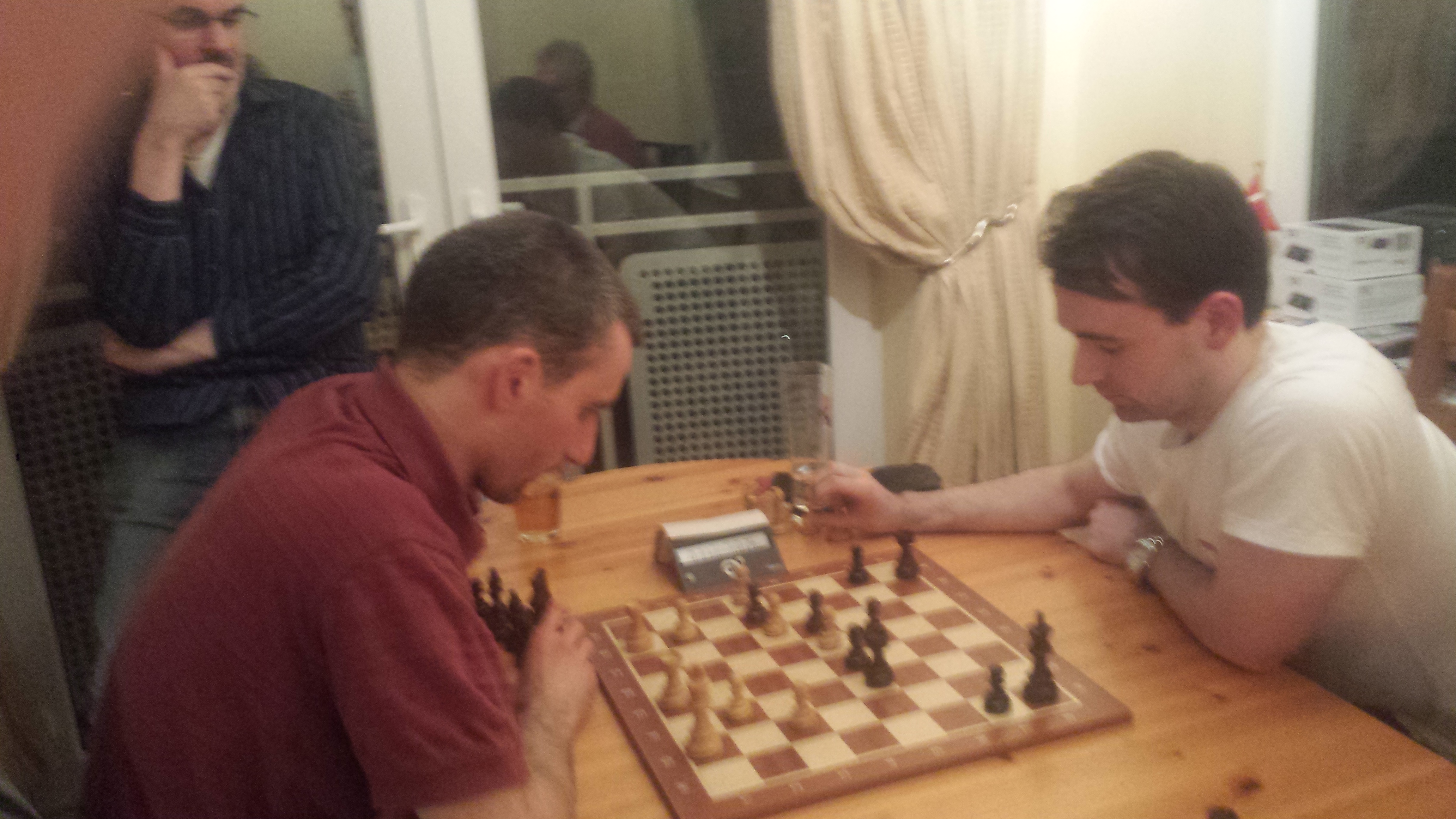
As I have recently moved to a new flat, I invited the guys from the office and my teammates from Edinburgh Chess Club to a blitz tournament. Original invitee Danny could not make it so John was forced to play. True to his recent change of style, he sacrificed queens and rooks and lost equal rook endings…

20150307_183121

20150307_194039

Read more…

Categories: Fun Games Tags:

1.d4 1A – A Preview of Avrukh’s New Grandmaster Repertoire

March 2nd, 2015 22 comments

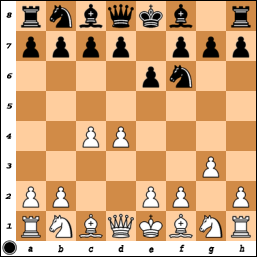
1.d4 Nf6 2.c4 e6 3.g3

This is the starting position for Boris Avrukh’s new volume: Grandmaster Repertoire 1A – The Catalan. The title is slightly misleading, as the book also covers the Bogo-Indian and Benoni systems that can occur via this move order. However, we decided to mention the Catalan in the title as it receives the lion’s share of the coverage. The purpose of this short post is to give you a few brief examples of what you can expect to see in the book. Some recommendations have stayed broadly the same (while still being updated and improved of course), but there are several important variations where Boris has gone in a completely different direction.

Let’s start with the Benoni.

3…c5 4.d5 exd5 5.cxd5 d6 6.Nc3 g6 7.Bg2 Bg7 8.Nf3 0–0 9.0–0 Re8
9…a6 10.a4 leads to the same sort of stuff.

10.Bf4
Previously Boris recommended 10.Nd2 a6 11.a4 Nbd7 12.h3 Rb8 13.Nc4 Ne5 14.Na3, but a problem line has emerged in the form of 14…Nh5 15.e4 Bd7 16.a5 b5 17.axb6 Bb5!. Marian Petrov was right on the money when he recommended this for Black in Grandmaster Repertoire 12 – The Modern Benoni.

10…a6
10…Ne4 11.Nxe4 Rxe4 12.Nd2 is another option, when the different placement of the a-pawns changes some details.

11.a4 Ne4 12.Nxe4 Rxe4 13.Nd2
Boris has plenty of ideas in this well-known line.

And next, the Catalan… Read more…

Categories: GM Repertoire, Publishing Schedule Tags:

Taking Stock

February 26th, 2015 25 comments

Usually I write mainly about what we are doing as a team in the office, write a few more complicated posts about things I am thinking about and so on. But I have not written much about what I have been doing personally the last year – for a simple reason – I have not been doing much…

Most of the people I know at the age of 40-42 seem to be going through a rough path. I alluded to this recently with my very subtly titled post “midlife crisis”.

Last year I would have rejected the idea that it is a moment where you take stock and decide what you want to do for the rest of your life. I would have said that it was an energy question; your body no longer renews itself and you have all these pressures of work, children and depleting energy reserves on top. It just becomes too much and you feel it on a level where you cannot put words on it.

I still like this way of explaining what happens, but I have definitely taken stock and I have made some big changes in my life. All of them for the better. The most positive was to buy one luxury product to go with my IKEA furniture and general discount lifestyle (I am the 2-for-1 king and the reduced aisle stalker…). I bought a BMW 318d Sport. Used of course, but still. It is a really nice car.

Street hustler Athens

But back to what I really wanted to write about: what I am writing.

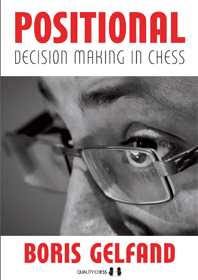
Boris Gelfand: Positional Decision Making in Chess

Gelfand-Positional280

I am getting close to the end. This book has really caused me a lot of resistance. Boris has been great – it has been all me and probably this is where I have suffered most in my midlife crisis. Lack of energy to do difficult work. Thus lots of blog posts and a bulking archive of exercises.

I hope to finish the writing of this book in 14 days from now.

Playing 1.e4: Caro-Kann, 1…e5 and Minor Lines by John Shaw

John is getting close to the end, but I will help him a bit with finishing the first book. As always, the name John Shaw on a book means that it is a team effort, with Nikos and I helping a lot (well, mainly Nikos of course!).

No one will believe this, but we will finish this book in March and maybe have it out in April.

Thinking Inside the Box

20150215_180322

This will take a long time and be very challenging. I know quite a lot of what I want to say. Keep in mind that no one can know everything before they start writing, so actually it is freakish how much I really know about what will be in this book. I have written a few chapters already and I have a nice synopsis. A clear run will be all it takes. I have no idea if it will take three weeks, three months or three years to write it. The book should be excellent if I do not screw it up, because I have some good things to say. So, let us call that a 50-50 percent chance that it will be as good as Attacking Manual 1 and Positional Play!? If you hated those books, obviously you do not like my style, so then it is 100% it will be crap!

Categories: Publishing Schedule Tags: