Stabbing John in the chest with guilt
John just received this e-mail:
Dear John,
I pre-ordered your book “King’s gambit” last autumn for my son as a Christmas present. Do you know when it will be published?
Regards,
xxx
John just received this e-mail:
Dear John,
I pre-ordered your book “King’s gambit” last autumn for my son as a Christmas present. Do you know when it will be published?
Regards,
xxx
We have for the last nine years been pressuring Tiger Hillarp-Persson to write another chess book after the hugely successful and in my opinion simply wonderful Tiger’s Modern. I just pushed again and he was squirming a bit, saying that he might get a round to it.
More importantly, he said that he is teaching a bit these days and that he has created a nice little website. So we thought, if we push that, maybe he will feel grateful and write another book for us. Is it too much to ask?
Update: A clearer conclusion has been added.
There are many ways to improve in chess, and I shall list a few of them next time. But this week, I want to focus on just one area – analysing your own games (as well as those of others). The simple yet important point is that, as with everything else in life, if it is not done well, you will not feel the benefits.
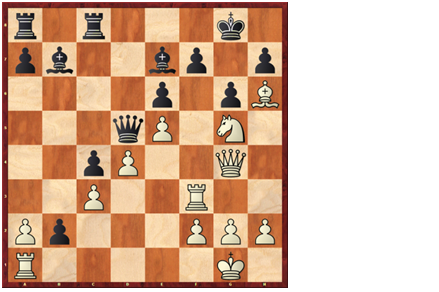
Mauro – Marina Brunello, Perugia 2011

22…Bxg5 23.Qxg5 Qd8 24.Qf4? 24.Rf6 with a worse, but still playable, position was to be preferred. 24…Bxf3 Now Black wins. 25.gxf3 Rc6 26.Bg5 Qe8 27.Bh6 f5 28.exf6 Qf7 29.axb3 cxb3 30.Qe5 Rac8 31.Bd2 Rb6 32.Be3 b2 33.Rb1 Rb7 34.Bd2 a6 35.h4 Rb5 36.Qd6 Qxf6 37.Qxa6 Rcb8 38.Qd6 Qf5 39.Kg2 R5b6 40.Qd7 R6b7 0–1
22…b2 was better, in Marina’s opinion. She was following the computer’s line of thinking and concluded that Black was doing well after 23.Rf1 Rf8 and now either 24.Rh3 Bxg5 25.Qxg5 f6 26.Qg4 Qe4 and Black wins, or 24.Re3 Qa5 25.Bxf8 Rxf8 26.Rh3 Bxg5 27.Qxg5 f6! 28.Qe3 Qxa2 29.exf6 Bd5 30.Qh6 Rf7 and Black wins.
Checking over her analysis I asked the first question that came to mind.

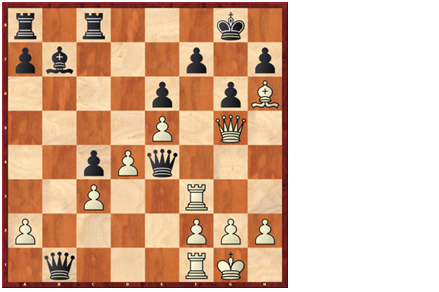
Why should White go with the rook to f1 instead of b1, with the simple idea of taking the pawn? I put the move into the machine and immediately it went ballistic with 23.Rb1 Bxg5 24.Qxg5 Qe4, with the idea of …Qxb1 and …Qe1. But after 25.Rf1 b1=Q, things are not so simple:

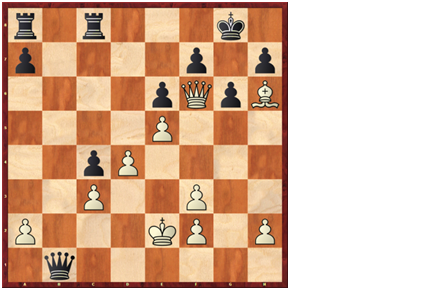
Obviously it looks intimidating with two black queens on the board, but it does not require a lot of human brute force to find: 26.Qf6! Qxf1+ 27.Kxf1 Qb1+ 28.Ke2 Bxf3+ 29.gxf3
I am sure the computer was suffering from a horizon problem when it first approached this position and just counted the pennies. But as our regular readers will know, quality trumps quantity every time! Black has to take a perpetual check.
Conclusion: This is not a small point about computer horizons, as it came across at first. My apologies. The idea was to be inquisitive when analysing your own games. To ask questions (and if you like using a computer, then at least make it a dialogue) and to find the answers. To remember what you were thinking during the game and find out what was right and what was wrong. It is an excellent feedback opportunity on the 4-5 hours you spent playing the game. But if you just spacebar your way through it, copying down computer evaluations, your benefit will be slim to none. Invest your mind and soul in the analysis and you will reap great rewards.
Thank you to Marina for allowing me to use this example.
John has finished Chapter 1 of the King’s Gambit. This does not mean that he has now started on Chapter 2 – this was done a long long time ago. Of the 22 chapters, only 3 remain; and none of them are too challenging.
Chapter 1 is mainly original analysis and spreads over 82 pages in the book. No wonder it was wearing him down.
I predict that this book is written in two weeks from now. Last I did prediction (read gambling on chess results) I lost 16 out of 16 bets. Luckily the betting agency sponsored the blitz event and I won my money back. Here is the prediction regarding some of our publications this year.
| Vassilios Kotronias | Kotronias on the King’s Indian – Fianchetto | June |
| Richard Pert | Playing the Trompowsky | June |
| John Shaw | The King’s Gambit | June |
| Ntirlis/Aagaard | Playing the French | June/July |
| Emanuel Berg | GM Repertoire – The French Defence Winawer | July |
| Axel Smith | Pump Up Your Rating | July |
| Jacob Aagaard | GM Preparation – Attack and Defence | August |
| John Shaw | Playing 1.e4 – Caro-Kann, 1…e5 & Minor Lines | Aug/Sep |
| Ftacnik (Aagaard) | GM6a – Beating the Anti-Sicilians | Later |
| Danny Gormally | Mating the Castled King | Sep |
| John Shaw | Playing 1.e4 – Sicilian & French | Oct |
| Jacob Aagaard | Grandmaster Preparation – Endgame Play | Oct |
| Tibor Karolyi | Mikhail Tal’s best games 1 | Oct |
| Judit Polgar | From GM to Top Ten – JP Teaches Chess 2 | Oct |
| Jacob Aagaard | GM Preparation – Thinking Inside the Box | Later |
Quick comment by Jacob:
Before engaging with this debate about critical moments, I contacted Willy Hendriks and asked if he would take offence, promising to disagree, but not be disagreeable. He would not, he said. I offered if he wanted to close off the debate with his personal view. As I did not want to invite him into a quagmire of never-ending arguments, I will not comment on his piece (which I have purposefully not read yet), although I am sure that I will disagree to some extent.
In the autumn I will publish Thinking Inside the Box, which will lay out my full view of chess and chess improvement. I will probably not refer directly to other books there, but state everything in the positive. But those wanting to find it, can find my view there and then (or earlier in this debate, most likely).
Next week I will return to focusing on chess improvement in the positive. Now to our guest writer:
Under the sign of uncertainty
– Willy Hendriks
In last week’s post Jacob Aagaard discusses chapter 14 of my book Move First, Think Later about the usefulness of the notion of the critical moment. I gladly accept his invitation to delve a bit deeper into this subject.
Aagaard considers this notion to be “well established” but I’m not sure it has the same meaning for everyone. Anyway, those who have read my book know that ‘well established chess theory’ is not sacred for me.
There are two aspects of this notion I’m a bit skeptical about, though they are not always explicitly brought forward. The first is the idea that games (very often) consist of a few (one or two) moments of extraordinary importance or difficulty and a lot of moments of much lesser importance.
The second is the idea that these moments not only can be identified with hindsight but also can be detected when you’re actually playing a game. Which would make the notion a constructive part of our thinking process. Read more…
We have a guest blogger this week. We will put it up tomorrow.
In Chapter 14 of his wonderful book Think First, Move Later, Willy Hendriks takes objection to the well-established idea of critical moments, with a direct reference to my book Excelling at Chess Calculation (Everyman 2004).
Obviously I am honoured to be the antagonist in a full chapter of Hendriks book, even if he does not elevate me to the level of a Bond villain. Especially because he initially represents my explanation of what a critical moment is rather truthfully.
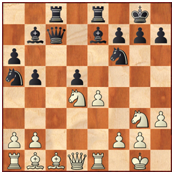
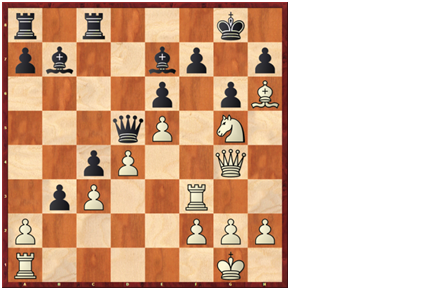
The position I use to explain the concept and which Hendriks represents is this:
After Black’s last move, to my horror I realized that 18.e5 would be met with 18…Bb4. I understood quickly that unless I found something strong, I would be seriously worse. For that reason I struggled with the position for almost 50 minutes before I came up with the solution:
18.e5 Bb4 19.Bf5!! Bxe1? 20.exf6 Qb6 21.Be3 Rxe3 22.fxe3 Bxg3 23.Qg4 Bf2+ 24.Kh1 Qxf6 25.Bxc8 h5 26.Qd7 Bxc8 27.Qxc8+ Kh7 28.Qc2+ g6 29.Rf1 1–0
So far all is well, but then Hendriks starts to psycho-analyse (me?), claiming that it is all hindsight. Maybe there could have been no 19.Bf5 available. His argumentation is probably fairly represented by this quote: “With hindsight it’s easy to say: ‘there I went wrong, that was the critical moment, why didn’t I use some more time there?’”
In his generally thought provoking, deeply intelligent and beautifully human book Think First, Move Later Willy Hendriks talks about various concepts. One is calculation, another is combinational vision and a third is seeing. But when reading the book I did not get the impression that the author had a clear definition of all of those; especially calculation.
In order to have a meaningful conversation, it is good to know if you mean the same things with the words you use. We can all think of words that have two opposite meanings, with my personal favourite being the word original, which prior to around 1750 meant “as it was in ancient Greece” or something to that effect; a permanent truth. After this of course it has meant “not seen before”, which is the way we use it today.
When discussing things or explaining complex points, it is good to agree that a cat purrs rather than barks. I have often made the mistake of believing that people would understand what I meant, when I used common terminology, only to find that this was not the case. A recent example was a review where my book Positional Play apparently did not deal with dynamics. As one of my three questions is: which is the worst placed piece, I found this confusing, but rereading it today, I see that the reviewer is a bit all over the place:
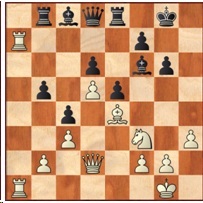
Taken from Adams-Giorgadze, Groningen 1997. The correct move is 29.h4! to put further pressure on the hook (a type of weakness) on g6. The reviewer insists that the tactical point that 29…Bxh4 is refuted by Bxg6 and Qh6 (in either order) is dynamics. Something very similar in Hendriks book is called calculation.
Let me give my own definition of some of these words (which others are by no means forced to follow!). Hopefully they will be meaningful and helpful to those reading this blog.
Dynamics: The immediate aggressive potential of the pieces. e.g. a dynamic advantage means your pieces are ready to do harm, while the opponent is uncoordinated.
Tactics: Operations based on very concrete variations.
Combinational vision: The ability to spot well-known tactical patterns.
Seeing: To me this includes something like why 29…Bxh4 does not work. It is definitely because of a tactic. But what it is not (for me) is:
Calculation: Forcing yourself to look for moves/variations either a) beyond your natural horizon or b) outside of your intuitive spectrum.
Obviously, the last two are subjective. What a GM sees, others will have to grind their way through with gritted teeth (calculation). When you work on your calculation, you will automatically improve your ability to see. You are slowly (very slowly) pushing your horizon away from you.
Sorry if this post is a bit technical, but it will all make sense when I discuss Hendriks book a bit more intimately next week, specifically Chapter 14, in case you want to read it in advance.
(A final note on the review: To make some sort of point, the reviewer puts the black king on g7 in a comparative diagram, to make a point I don’t fully understand. Obviously chess is not an entirely static game; the pieces move! But at the same time, chess is also a static game, so those armed with poor understanding and a computer will struggle to understand quite a lot.)
Recent Comments