Archive

Archive for the ‘Jacob Aagaard’s training tips’ Category

Top players and their limitations – open for debate

September 22nd, 2014 45 comments

On Friday we received an email from a book reviewer congratulating us on the outcome of the referendum, where the Scottish people declined the proposed secession from the United Kingdom. I answered him, stating that we were actually divided in the office on the best way forward, with one declared supported, two clear no-votes, one “evil referendum” opinion and two undeclared.

Read more…

Categories: Jacob Aagaard's training tips Tags:

On Book Titles

September 15th, 2014 56 comments

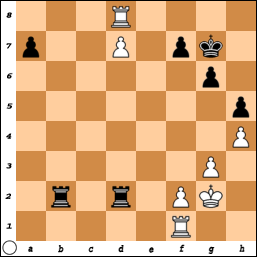
We start with a preview from the Gelfand book, taken from a variation from Navara – Gelfand, Prague (1) 2006.

Black to Play and Win


In our weekly editorial meeting we have been debating the book with the working title Chess from Scratch at length almost every week. To cut to the pawn ending, basically we have wanted to squeeze a Soviet treasure into a title where it did not fully fit.

The title is not a description of the content of the book, but something we use to make people look at the book and find it interesting. Once you have people reading, hopefully they will forgive you anything. Obviously we care a lot about what is inside the book and not about the title, though we have to find good titles nonetheless…

On Friday I came to the meeting with a bombshell. I had finally realised that the box did not fit. We want to develop the ‘From Scratch’ series with a few more books, based among others on how much we love Chess Tactics from Scratch. But the Maizelis book does not fit. No matter how much we wanted it to fit.

So, we will publish it as The Soviet Chess Primer. It will be out in 5-6 weeks. We will have another book called Chess from Scratch quite soon as well. The author is someone a lot closer to home. Me.

The position at the start of the article Read more…

A few words about mistakes

September 1st, 2014 13 comments

This will hopefully be a short post, as I am rather exhausted, suffering from a cold and four hours of rook and knight vs. rook and knight endgame analysis with Boris Gelfand.

In the cause of events we talked about one of the recurring topics – what constitutes a mistake.

I wrote about this already in Excelling at Chess published back in 2001 and although I cannot remember the words I used, I do not think there was any noticeable difference between what Boris said and what I wrote back then; maybe with the exception that Boris phrased it a bit more accurately.

A mistake is a move that makes your task more difficult.

It is that simple.

The topic came up when I said at one point that I thought that one move he made was maybe not a mistake anyway, if White was able to hold the draw no matter what. I meant this in the objective sense, in which we often use ?!, ? and ??. I have to admit that in my annotations I have a strong tendency to go for ? only in the situations where the objective evaluation of the position is significantly changed. This means after analysis and engine assistance.

But this of course does not tell us anything about how many good moves we still have to find in order to win the game.

In Excelling at Chess I told the story of how a friend of mine was three pawns up and later on complained of how he missed the win when he was one pawn up. It is of course an extreme example, but this is essentially what we are talking about. It is not important if the engine can find a win, but if you can find it at the board; and how easy/difficult it is to do so.

The same with equal positions. There are equal positions that are comfortable, promising and depressing. I know which ones I prefer.

The morale of all of this is that when you analyse your games and think about your play after the game, do not complain that you are not as strong as the engines; instead understand where you needed the engines help to prove your point and where you did not. Obviously this is only relevant if you want to improve your results. Otherwise ignore and continue with your Internet blitz games!

Categories: Jacob Aagaard's training tips Tags:

How to use opening books (and own analysis) for memorisation

August 25th, 2014 64 comments

I have been asked about writing this short article a number of times and have hesitated, because it is obvious that many will have other ideas and opinions, as well as be critical of what I will say. But to make it clear: I am just presenting my own system, which makes sense to me. I am not saying that this is how everyone should do it or that this necessarily fits most people. It is just how I have had positive experiences working.

Read more…

Categories: Jacob Aagaard's training tips Tags:

Back to Basics

August 18th, 2014 29 comments

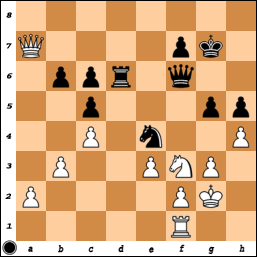
How would you defend this position with White?

Read more…

Categories: Jacob Aagaard's training tips Tags:

Grandmaster Q&A Part 5

July 28th, 2014 8 comments

In the autumn of 2013 I gave ten hours of training to a GM who has been struggling for years, unable to improve his play and slowly bleeding rating points. I felt he had certain problems in concrete positions, but in general needed to work more on improving his play.

After the sessions he sent me a long list of additional questions that I agreed to answer, if I was allowed to share them with the readers of the blog. As long as I kept his name confidential, he saw no problem with this.

As we are talking quite a lot of material, I have decided to cut up the Q&A session into five posts.

This post continues from last week’s post.

Read more…

Categories: Jacob Aagaard's training tips Tags:

Grandmaster Q&A Part 4

July 21st, 2014 10 comments

In the autumn of 2013 I gave ten hours of training to a GM who has been struggling for years, unable to improve his play and slowly bleeding rating points. I felt he had certain problems in concrete positions, but in general needed to work more on improving his play.

After the sessions he sent me a long list of additional questions that I agreed to answer, if I was allowed to share them with the readers of the blog. As long as I kept his name confidential, he saw no problem with this.

As we are talking quite a lot of material, I have decided to cut up the Q&A session into five posts over the summer.

This post continues from last weeks post.
Read more…

Categories: Jacob Aagaard's training tips Tags:

Grandmaster Q&A Part 3

July 14th, 2014 6 comments

In the autumn of 2013 I gave ten hours of training to a GM who has been struggling for years, unable to improve his play and slowly bleeding rating points. I felt he had certain problems in concrete positions, but in general needed to work more on improving his play.

After the sessions he sent me a long list of additional questions that I agreed to answer, if I was allowed to share them with the readers of the blog. As long as I kept his name confidential, he saw no problem with this.

As we are talking quite a lot of material, I have decided to cut up the Q&A session into five posts that will come over the summer.

This post continues from last week’s post.

6) How to accept defeat and move on during the tournament? We all know how it feels to lose a game in a long game of Chess especially after getting a very good or completely winning position or missing an excellent opportunity to finish the tournament at the very top. My question here is rather psychological.

The first thing is to accept your emotions. If you are upset after a defeat, I do not believe that you should suppress that emotion.

But it makes sense to question why you have those negative emotions. Often it is because of how we see ourselves in the situation we are in. A great saying is: Disappointment requires adequate planning! – that thing you wanted/expected, did not happen.

What are your rules for how you view chess? I try to like chess for all the positive things. When I was very young I saw it as a vehicle for my own ego, status and so on. I suffered very badly. Today I see it as an opportunity to experience all the great emotions that run through us when we play. The tension, the excitement, the thrill of winning, the stubbornness of fighting against the dying of the light.

I have come to a point where I care a lot about the effort I put in. But at times my opponents play better than me, even when I do the best I can. In those cases I might feel disappointed; but I also know that what I did wrong was perhaps not training enough, not preparing in the right way and so on. It was not my effort during the game.

I am quite a passionate tennis player. Also rather weak, but this is not so important. The main thing is that at times, when I play doubles, my partner makes a bad shot and then spirals out of control in disappointment. I am rarely affected. I know that being a weak club player means that I will make a lot of mistakes that better players do not. In the same way I know I will make mistakes when I play chess; I am a Grandmaster, but not an especially great one. By adjusting my expectations to my own play (and that of my opponent), I am better prepared to do what I really need to do:

Solve the problem: What should I play on the next move.

Results come. Game ends. We cannot force them to end as we wish. What we can do is learn to solve the problems in front of us better and to improve our persistence in doing so.

7) I always try to avoid a Queen Exchange and kind of avoid playing endgame. Funnily Endgame comes very rarely in my games and if it comes then it becomes quite clear most of the time. Should I deliberately change this approach?

Read more…
Categories: Jacob Aagaard's training tips Tags: