Archive

Archive for the ‘Fun Games’ Category

Petrosian on the Younger Generation by Danny McGowan

April 22nd, 2015 14 comments

While working on Python Strategy by Tigran Petrosian (excerpt here), I especially enjoyed reading his opinions on the strengths and weaknesses of other players. The ‘younger generation’ players alluded to in the title, namely Jan Timman, Zoltan Ribli and Ulf Andersson, were all born in 1951 and all went on to have hugely successful chess careers – and indeed all still play to a high level to this day. Petrosian made his comments in 1973 as the players were rising through the ranks. Timman was an International Master at the time, while Andersson and Ribli had been awarded the Grandmaster title in 1972 and 1973 respectively. It is interesting to compare Petrosian’s contemporary assessment of the trio with those we may hold now. So without further ado, I will hand you over to Petrosian:

I would particularly like to discuss the play of Timman, Ribli and Andersson. The Swede Andersson, the Dutchman Timman and the Hungarian Ribli are among the leading young players who will undoubtedly put pressure on the older generation in the next few years. And whenever I come together with them, there is something I would like to know. When we give up our place in the chess sun to the young talents, will it be because our play has changed for the worse on account of our age? Or will those who begin to surpass us be chessplayers who have risen to a new, higher level of mastery?

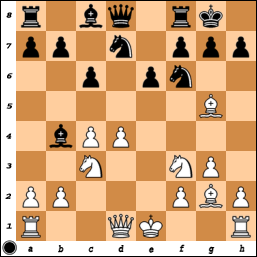
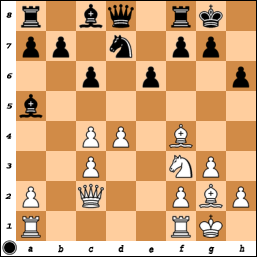
Ulf Andersson: small and slight, in outward appearance he seems more like a child who has strayed into the hall looking for a simultaneous display than a fully-fledged competitor in the main tournament. I somehow feel sorry for him. He crazily trails from tournament to tournament, and the easy opportunity to lead the life of a modern chess professional (who fortunately is not overburdened with worries about every crust of bread, unlike the professional of the not too distant past) has already left a grave imprint on his manner of play and his tournament psychology. In his games you rarely, very rarely see him aspiring to a full-blooded struggle. “Safety first” is not a motto before which chessplayers in such young years ought to bow. It leads to nothing good. And yet Andersson is capable of simply playing well. He possesses positional understanding, a keen eye for tactics, and vast theoretical knowledge to go with a well-worn tournament repertoire. In a word, all the signs of a top-class player are present. And at the same time – there are all the signs of creative stagnation.
Read more…

Categories: Fun Games Tags:

Chess Structures in Practice (Part Two) by Mauricio Flores Rios

April 16th, 2015 5 comments

I am back for a second and final guest blog post here on the QC blog. You will be able to see a copy of this post, and all my future posts on chess-structures.com, my new blog.

Just like many of you, I spent a fair amount of time last week going following the US Chess Championship played in St Louis. There was plenty of excitement, the live broadcast was very good and more important than anything, the tournament featured what was arguably the strongest combination of twelve players to ever compete in the US Championship. Despite having plenty of nice games to choose from, I think that the game I will show next was the nicest illustration of concepts from Chess Structures put into practice.

Alexander Onischuk (2655) – Daniel Naroditsky (2633)

US Chess Championship 2015

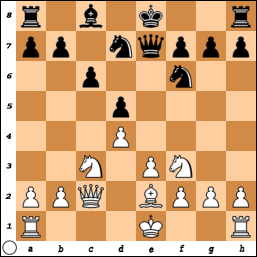
1.d4 Nf6 2.c4 e6 3.g3 d5 4.Nf3 Bb4+ 5.Bd2 Bd6 6.Bg2 c6
The move order 6…0-0 7.0-0 Nbd7 8.Qc2 and only now 8…c6 seems to be more precise, making it harder for White to take control of the center.

7.Nc3 O-O 8.Bg5! Nbd7
8…dxc4 would be met by 9.Nd2 followed by 10.Nxc4.

9.e4 dxe4 10.Nxe4 Bb4+ 11.Nc3!
In case of 11.Bd2? Bxd2 12.Nexd2 e5! and Black equalizes.
We have reached the Caro-Kann Formation (Chapter 3), where White has more space and a better control of the center. The assessment of this position depends almost exclusively on whether Black can find a way to break in the center to release his spatial disadvantage. Otherwise, White will enjoy a lasting positional edge.

11…h6
Getting rid of the pin, aiming to create some counterplay with …Ne4.

It seems Black did not have better options, for example 11…c5 12. 0-0 cxd4 13. Qxd4 where White has superior coordination. Also 11…Qa5 12.Bd2 e5 is met by 13.a3! Bxc3 14.Bxc3 Qa6 15 0-0! with a big advantage.

12.Bf4 Ne4 13.Qc2 Nxc3 14.bxc3 Ba5 15.O-O

This is a good moment to evaluate the position. The structure has changed slightly since White now has doubled c-pawns (which also means he has a semi-open b-file). Black has been unable to release his position with either …c6-c5 or …e6-e5 and having his bishop trapped on c8 only adds to his misery. White has a very comfortable advantage.

Read more…

Categories: Fun Games Tags:

What to rely on

April 15th, 2015 7 comments

In the recent 4NCL I had the honour of playing first board for Wood Green with Black in two games. As I am entirely out of shape and blunder in more or less every rare game I play, my goal was to make draws, eliminate their best players and hope that the team would win on the other boards. This all went to plan and I gladly donated 1-2 rating points to the well-being of the team. Besides, I hope I will be allowed three white games in the final weekend!

My game on the Saturday was quite interesting at one moment, just after I blundered (always happens!) and I had to decide how best to deal with the defence. I think my considerations at the board were quite interesting and worth a minor discussion.

James Cobb – Jacob Aagaard

1.Nf3 Nf6 2.c4 c6 3.Nc3 d5 4.e3 e6 5.b3 Bd6 6.Bb2 Nbd7 7.d4 0–0 8.Be2 Re8 9.0–0 Qe7 10.Qc2 dxc4 11.Bxc4
11.bxc4 e5 12.Nh4 Nf8 13.Nf5 Bxf5 14.Qxf5 exd4 15.exd4 Ne6 looks OK for Black. During the game I was slightly less sure, but I was going to play this way and that is what counts.

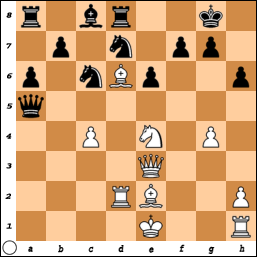
11…h6 12.Ne4 Nxe4 13.Qxe4 e5 14.dxe5 Nxe5 15.Nxe5 Bxe5 16.Qxe5 Qxe5 17.Bxe5 Rxe5 18.Rfd1 Kf8 19.Rd8+ Re8 20.Rad1 a5 21.a4 Rb8 22.R8d4 b5 23.axb5 cxb5 24.Bd5 Rd8 25.Kf1 Ke7

This is my blunder. I really had no clue that this was coming. As usual when this happens, I smiled. Life has lots of surprises for us; not all will be positive.

Read more…

Categories: Authors in Action, Fun Games Tags:

Chess Structures in Practice (Part One) by Mauricio Flores Rios

April 8th, 2015 28 comments

It’s been a while since I finished writing Chess Structures, but I like the topic so much that I keep coming back to it – I know how much it improved my understanding of chess. I follow games on Chessbomb pretty much daily and I really enjoy it when I see a nice ‘structure-concept’ being applied. Often these games reproduce ideas shown in the book almost identically, while sometimes there are small (yet very important!) differences. So I thought, why not start a blog in which I will, once in a while, post a game which builds upon the ideas I shared with the readers of my book. Since the hardest point of starting a blog is finding any readers at all, John offered his help, suggesting I post a couple of guest blogs here. The permanent location of my blog will be chess-structures.com, though it will take me about 4-5 days to set it up properly, since I am a complete beginner as far as websites go.

Now let’s get started with some chess. As you may have realized, almost every game in my book was decisive (that is, not a draw) since drawn games (especially agreed draws) are like an unfinished story, and people just don’t like to read stories without an ending… Anyway, the only exception to this rule was Onischuk – Dominguez from the World Cup of 2013. This game was a Carlsbad structure (Chapter 5) which I thought was very instructive, as it shows how Black might completely neutralize White’s queenside plans. A few days ago, as I was following the Women’s World Championship in Sochi, I found a great example which pretty much takes off where Dominguez left off, and brings home the full point. The contenders: young star Guo Qi from China was White against World finalist Natalia Pogonina. Let’s see the game:

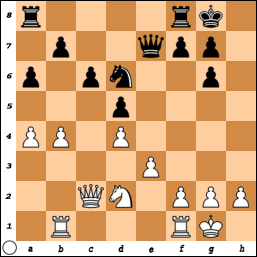
1.d4 Nf6 2.Nf3 d5 3.c4 e6 4.Nc3 Be7 5.cxd5 exd5 6.Bg5 c6 7.Qc2 Nbd7 8.e3 Nh5 9.Bxe7 Qxe7 10.Be2 Nhf6  

11.Nd2?!
White deviates from theory, possibly to prevent …Ne4. This is a little imprecise since quickly playing b2-b4-b5 should be the priority.
Normal was 11.0–0 to follow up with Rab1, b2-b4-b5, and if 11…Ne4 12.Nxe4 dxe4 13.Nd2 Nf6 14.Rab1!? we have transposed to Chapter 20, the French Type II (with colours reversed) where White’s prospects are good, since the break b4-b5 is easy to carry out, and Black lacks material (and moves) to create serious kingside threats.

11…Nb6 12.0–0 0–0 13.Bd3
If 13.Rab1 then 13…Bg4! 14.Bd3 Bh5 is similar to the game.

13…Bg4 14.Rab1 Bh5!
Black is aiming to trade light-squared bishops, which is a good idea.

15.b4 a6
A standard reply, to trade off a-pawns, getting rid of a potential weakness.

If 15…Bg6 then 16.Bxg6 hxg6 17.b5!? would typically create problems for Black, since both the a7- and c6-pawns can become weaknesses, however White’s play has been imprecise, and after 17…Rfc8 18.bxc6 Rxc6! Black has good counterplay (but not 18…bxc6? when White is a little better).

16.Na4
After 16.a4 Bg6 17.Bxg6 hxg6 the standard 18.b5?! is met strongly by 18…cxb5 19.axb5 a5! with an edge. Black has a passed pawn, making White’s entire enterprise a failure.

16…Nxa4 17.Qxa4 Bg6 18.Bxg6 hxg6 19.Qc2
My favourite moment in the game; Pogonina is doing well, but now how should she stop a4 and b4-b5?

19…Ne8! 20.a4 Nd6


Black is slightly better.
The position is almost identical to the game Onischuk – Dominguez (annotated in Chapter 5). White’s queenside play is no longer dangerous. The big difference between this game and the one in the book is that here Black has a half-open h-file, creating better prospects for kingside play.

Read more…

Categories: Fun Games Tags:

Negi novelty tested

March 11th, 2015 22 comments

The Poisoned Pawn variation of the Najdorf is one of the most theoretically dense variations in modern chess. Negi gave plenty of ideas against it in 1.e4 vs The Sicilian I. But would players remember the theory? And would the ideas work?

Yes and yes. Obviously.

Jorden van Foreest (2494) – Nico Zwirs (2358)
Amsterdam 20.02.2015

1.e4 c5 2.Nf3 d6 3.d4 cxd4 4.Nxd4 Nf6 5.Nc3 a6 6.Bg5 e6 7.f4 Qb6 8.Qd2 Qxb2 9.Rb1 Qa3 10.e5 dxe5 11.fxe5 Nfd7 12.Ne4 h6 13.Bh4 Qxa2 14.Rd1 Qd5 15.Qe3 Qxe5 16.Be2 Bc5 17.Bg3 Qd5 18.c4 Bxd4 19.Rxd4 Qa5+ 20.Rd2 0–0 21.Bd6 Rd8 22.g4 Nc6

All Negi. It’s on page 255 of the book if you wish to check.

23.g5!?

This move was a novelty when Negi suggested it, and 15-year-old Dutch IM Jorden van Foreest is the first to test it. In Negi’s words, this move is “the maximalist try”.

Negi’s main line is 23.0–0!? which is “the simplest way, which does not require too much analysis.”

Read more…

Categories: Fun Games, GM Repertoire Tags:

A sort of Scottish Blitz Championship

March 9th, 2015 8 comments

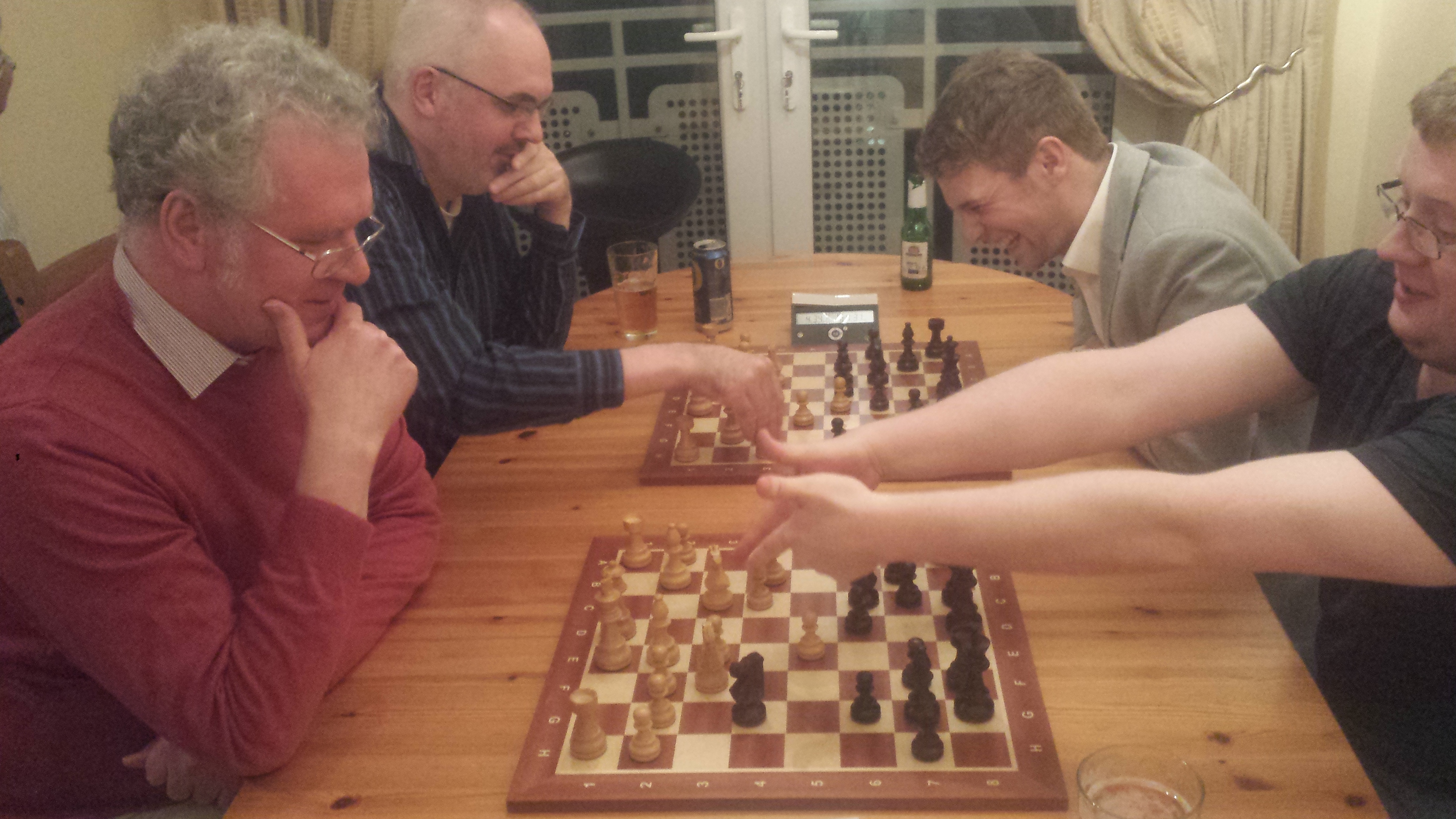
In Scotland we have an official blitz championship, held in June usually (and hopefully again this year!). It is an open Championship held in Edinburgh and is usually very well organised. Importantly, it is open to players from all nations. Last year it was won by Matthew Sadler in front of Arkadij Naiditsch. English GM Matthew Turner became Scottish Champion, as he is a member of FIDE through the Scottish Federation, although he would not be allowed to play for Scotland according to the selection rules. I would, but am a member of FIDE through the Danish Federation and thus had to console myself with third place.

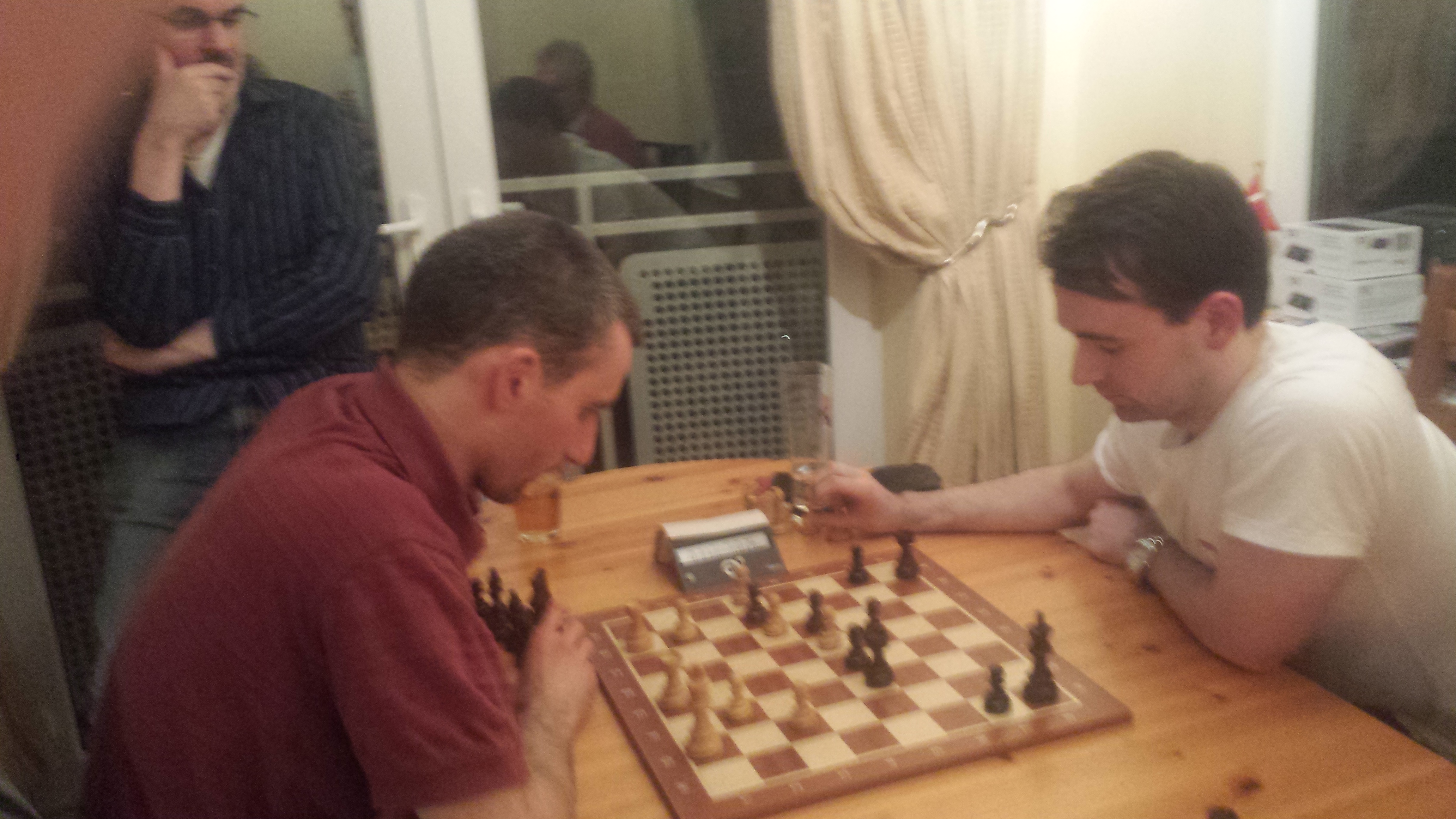
As I have recently moved to a new flat, I invited the guys from the office and my teammates from Edinburgh Chess Club to a blitz tournament. Original invitee Danny could not make it so John was forced to play. True to his recent change of style, he sacrificed queens and rooks and lost equal rook endings…

20150307_183121

20150307_194039

Read more…

Categories: Fun Games Tags:

Good form or good luck

February 20th, 2015 7 comments


Last weekend I played two games in the 4ncl. It went well.

John Shaw (2426) – John Richardson (2330)
4ncl 14.02.2015

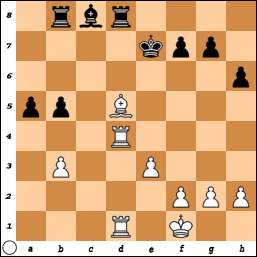
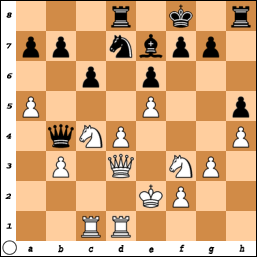
Assess the position and choose a move for White.

White to play

Read more…

Categories: Fun Games Tags:

The French Fist of Fury

February 18th, 2015 27 comments

Ian Snape (2135) – Andrew Greet (2450)
4NCL, 14.02.2015

My opponent is not so highly rated, but he used to be in the high 2200s and in our previous meeting I was on the rough side of a draw. This time, however, I had Playing the French to help me…

1.e4 e6 2.d4 d5 3.Nc3 Nf6 4.e5 Nfd7 5.f4 c5 6.Nf3 Nc6 7.Be3 a6 8.Qd2 b5 9.dxc5 Bxc5

10.Ne2

In one previous game my opponent played 10.Bxc5 Nxc5 11.0–0–0, which seems rather risky. 11…Qb6 12.Bd3 b4 13.Ne2 a5 14.Ned4 was Snape – Shepherd, Coulsdon 2013, and now after 14…Nxd4 15.Nxd4 0–0 Black’s attack is further advanced.

I also saw that Snape has played the text move on two previous occasions, but neither of his opponents chose the most accurate continuation at move 12 below.

10…Qb6 11.Bxc5 Nxc5 12.Ned4 Bd7!

12…Nxd4 13.Nxd4 Bd7 is fully playable, but the text move is more flexible, as explained in “Playing the French”. Rather than hurry to exchange knights, I’ll let my opponent do it and develop my bishop in the process.

Read more…

Categories: Fun Games Tags: